How to Track French Progress at Home Without Testing
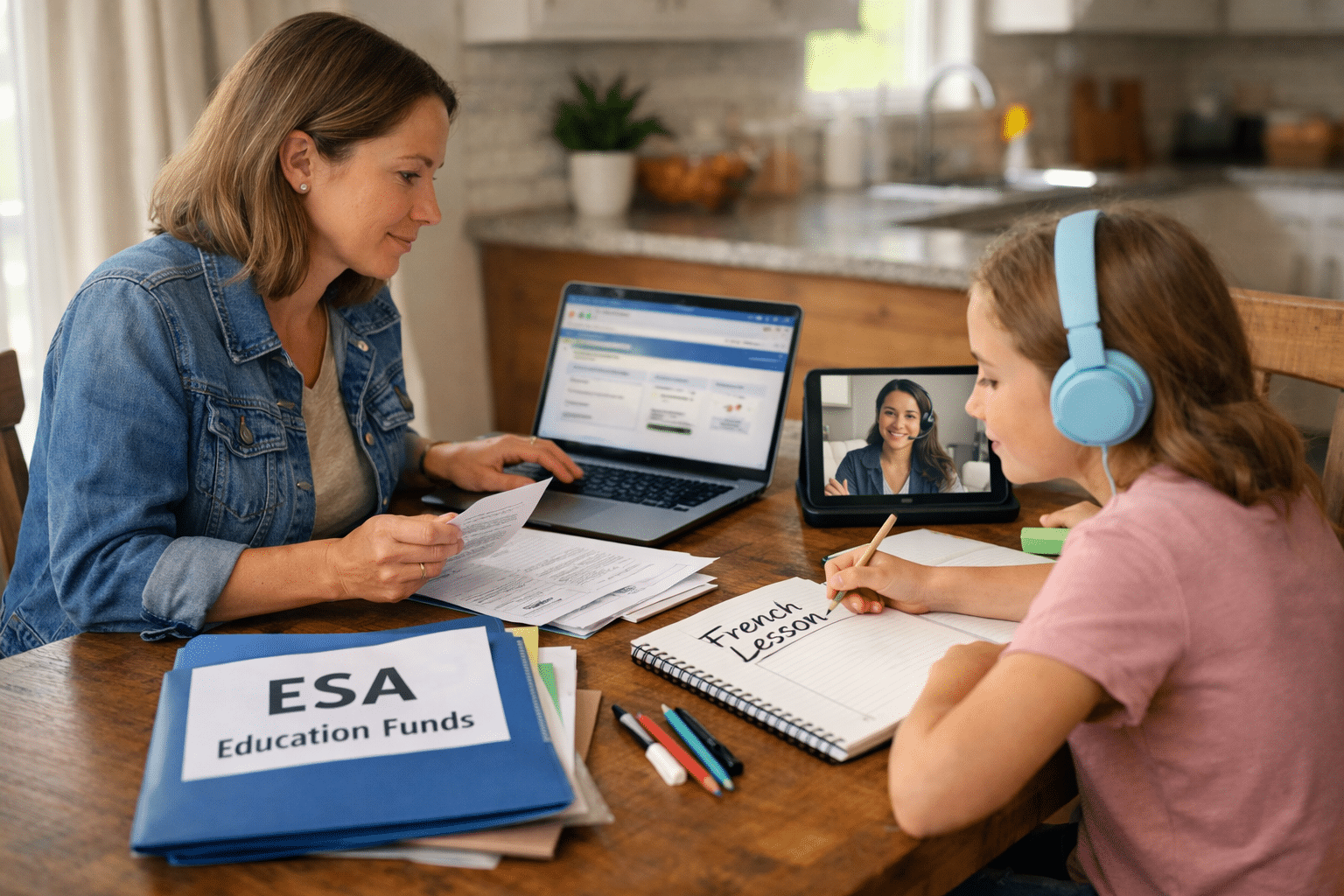
Homeschool parents can track French progress at home without formal tests by observing independence, reaction time, and spontaneous use of French. Real progress appears in how quickly a child understands instructions, responds in French, and applies vocabulary in daily life. These organic signs are more accurate than traditional quizzes.
As a homeschool parent, it is natural to want proof that your child is moving forward. However, in language learning, a traditional test or a surprise quiz can often do more harm than good. When a child feels put on the spot, their “affective filter” goes up, and the words they actually know might suddenly vanish.
So, how do you measure progress without a gradebook? The answer lies in noticing the “natural shifts” in how they interact with the language during and after their online lessons.
Look for the “Independence Milestones”
Instead of asking your child to translate a list of words, watch for these signs of growing independence:
- The Reaction Time: In the beginning, there is a long pause while a child translates in their head. Progress is when that pause gets shorter. If they laugh at a joke I made or follow an instruction on the screen before I even finish the sentence, that is a huge win.
- The Context Clues: Do they look at you for help every time I speak, or are they starting to figure it out on their own? A child who uses the images on the screen or my gestures to understand is developing “linguistic intuition.”
- The Spontaneous Leak: Watch for French appearing in their daily life. This might be humming a song from class while they play or using a French greeting with the dog. These unprompted moments are the most honest evidence of learning.
The Power of the “Can Do” List
At Inspire, we prefer to focus on what a child can do rather than what they got wrong. You can keep a simple mental list (or a small notebook) of these “Can Do” moments:
- Level 1: They can follow a simple instruction (e.g., “Color the house blue”).
- Level 2: They can make a choice using French (e.g., “I want the red apple, not the green one”).
- Level 3: They can describe a feeling or an event (e.g., “I am tired because I played outside”).
When you see these shifts happening, you know the foundation is getting stronger.
How This Fits With Inspire Progress Reports
At home observation works best when it is paired with my professional feedback. In our online classes, I track these same pillars across listening, speaking, reading, and writing.
Through our progress reports and class notes, I share the specific milestones I am seeing on my side of the screen. Often, parents find that their “kitchen table” observations match exactly what I am noticing in class. When those two perspectives line up, it gives you a complete and reassuring picture of your child’s success.
You can track French progress at home by focusing on consistent growth across listening, speaking, reading, and writing. By focusing on these organic markers, you keep the joy of learning alive while staying fully informed about their growth.