
How to Use a French Assessment Checklist for Homeschool Families
A French assessment checklist for homeschool families helps parents track their child’s language progress without formal tests or grades. By observing listening, speaking, reading, and writing during and after lessons, you can clearly see whether your homeschool child is improving in French. This simple checklist makes it easy to measure real progress at home.
Knowing that your child is making progress is one thing, but having a concrete way to track it is another. Many parents tell me they want to help, but they are not sure exactly what they should be looking for while they sit on the other side of the room during a lesson.
To make this easier, I have put together a step by step observation framework. You do not need to speak French to use this. You only need to be a quiet observer of how your child interacts with the language and their teacher.
Step 1: The “Engagement” Observation
Before we even look at grammar or vocabulary, we look at connection. This is the foundation of all learning.
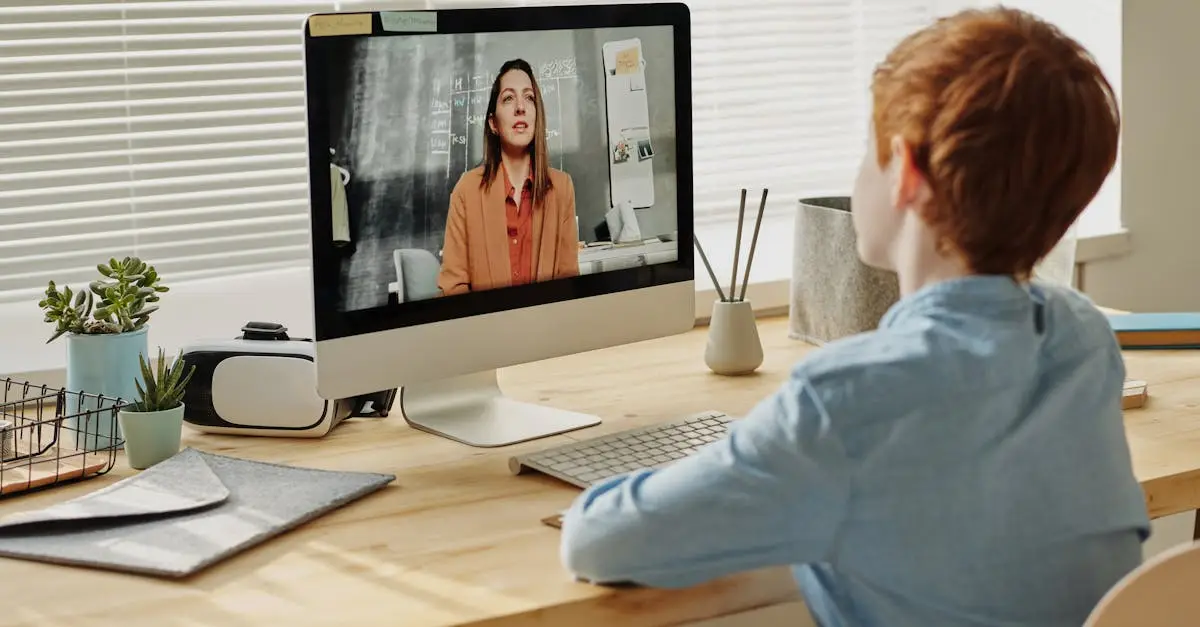
- Does your child lean toward the screen when the teacher speaks?
- Do they react emotionally (laughing, smiling, or looking surprised) to the stories?
- Are they using the digital tools like the pen or stamps without being reminded how they work?
Step 2: Checking the Four Pillars
Use this simple checklist during a typical lesson. Instead of looking for perfection, look for consistency.
Listening (Comprehension)
- [ ] They follow a one step instruction (e.g., “Montre-moi un stylo”).
- [ ] They follow a two step instruction (e.g., “Dessine un cercle et colorie-le en bleu”).
- [ ] They answer a “this or that” question correctly (e.g., “Tu préfères le chat ou le chien?”).
Speaking (Production)
- [ ] They use “polite” French spontaneously (Merci, Bonjour, Au revoir).
- [ ] They attempt to answer in French before falling back on English.
- [ ] They repeat new words to themselves to practice the sound.
Reading and Writing (Literacy)
- [ ] They can match a word on the screen to its picture.
- [ ] They type short, recognizable words in the class chat.
- [ ] They use the drawing tools to label parts of a creative project.
Step 3: The “After Class” Reflection
Progress often shows up ten minutes after the laptop is closed. Notice if your child:
- Tells you one specific thing they learned without being prompted.
- Uses a French word or phrase while playing later in the day.
- Seems proud of a drawing or a project they completed during the session.
Your Free French Assessment Pack
If you want to make this even easier, I have created a printable French assessment worksheet specifically for homeschool families. It includes a more detailed version of this checklist and a place for you to jot down those “spontaneous wins” that happen throughout the week.
Download the Free French Assessment Pack Here
How We Use This at Inspire
At Inspire, we use these same observations to build our progress reports. We take into account the “Pillars of Language” and the unique interests of every student. When you use this checklist at home, you are helping us create a 360 degree view of your child’s success.
By noticing the small steps, we can celebrate the big milestones together.