How to Assess French Level for a Homeschool Child at Home
To assess French level for a homeschool child, observe what they can consistently understand, say, read, and write across the four language pillars: listening, speaking, reading, and writing. You do not need formal tests or to speak French yourself. By noticing independence, confidence, and spontaneous language use, you can accurately determine your child’s CEFR level.
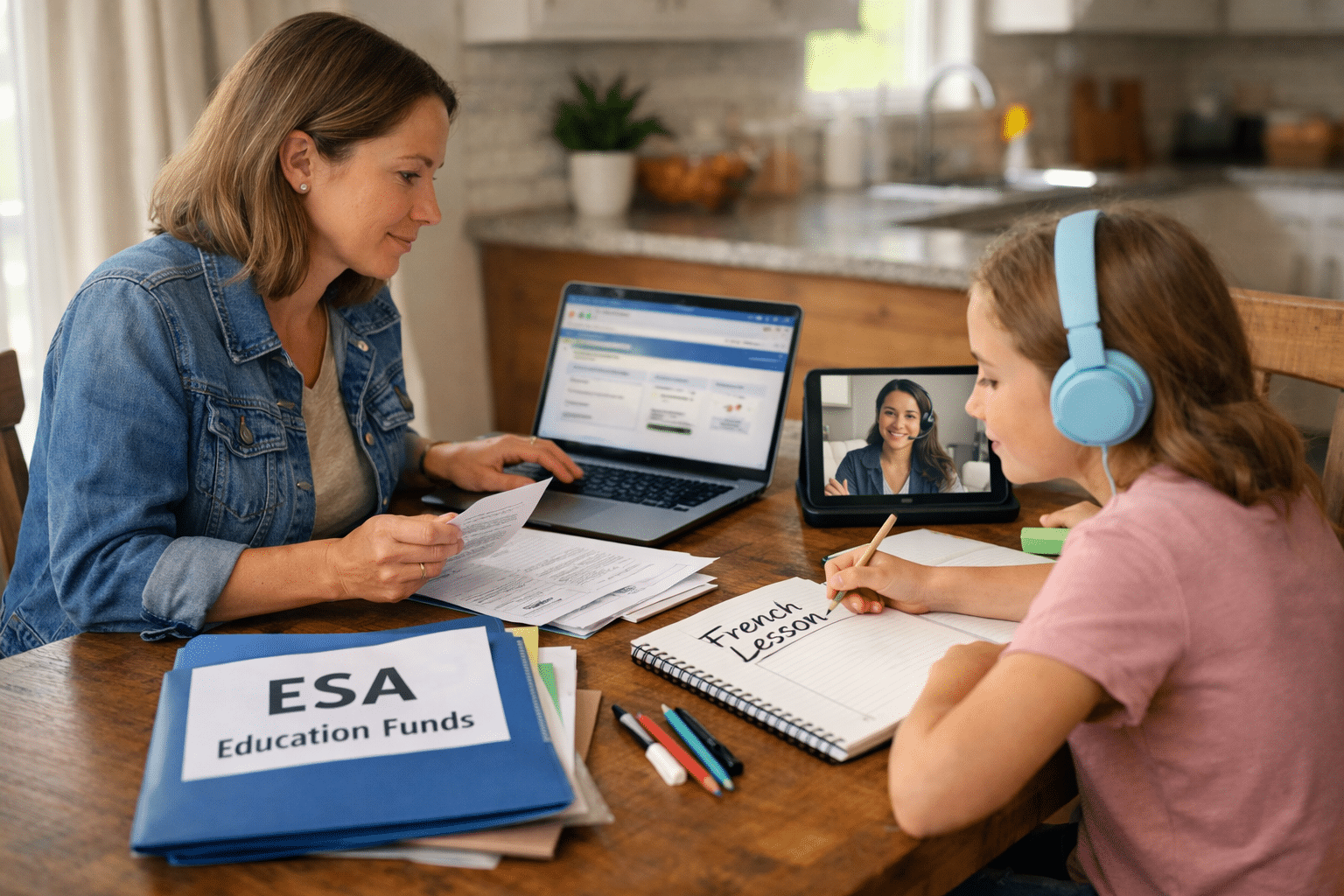
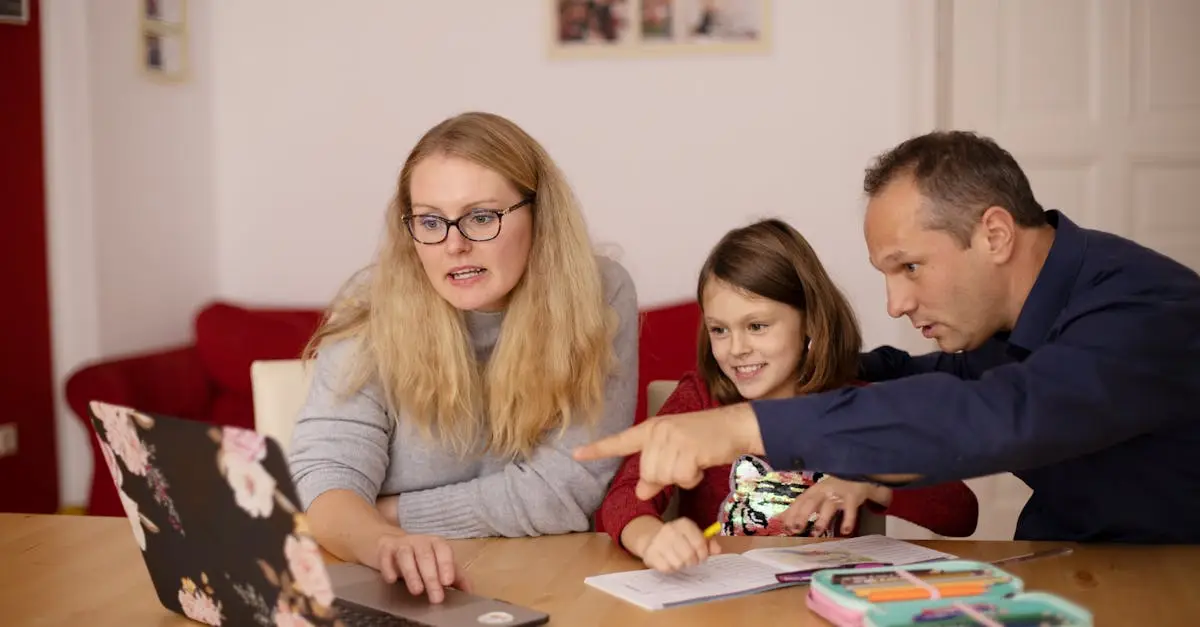
If you are homeschooling and trying to figure out how to assess your child’s French level, you are likely doing what most of my parents do. You are hovering just out of camera range, listening to the audio from the laptop, and trying to decipher if that long pause means your child is thinking or if the Wi Fi has just cut out again.
It is a bit of a guessing game. Parents searching for how to assess French level for homeschool child often assume tests are required, but structured observation is more reliable.
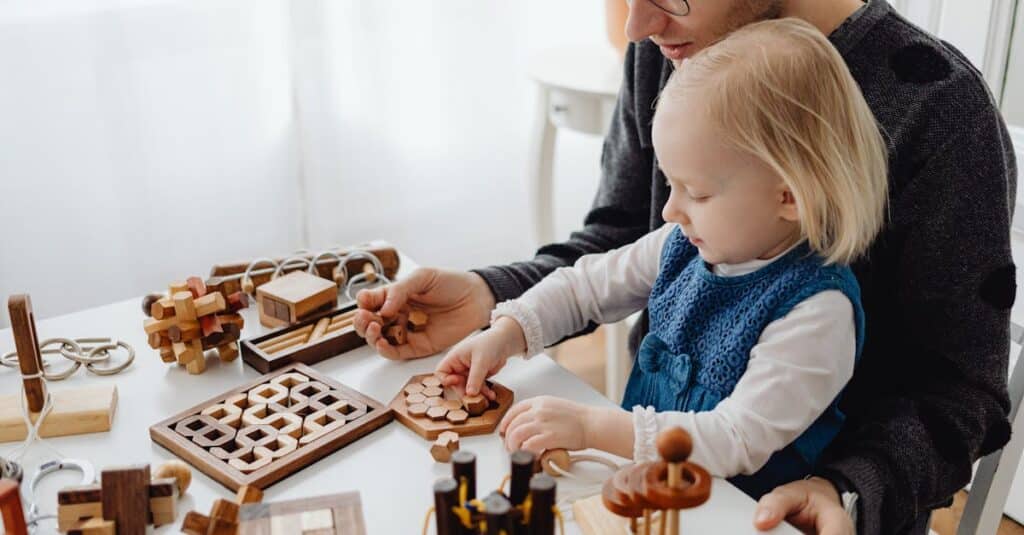
The truth usually comes out when students are given the freedom to use the screen annotations or are asked to complete a creative task. When I ask a student to design their dream home, for example, they become fully immersed in expressing themselves. They might be coloring, drawing, or labeling rooms and objects. Because it is “their” thing, they forget to be nervous. They choose the right colors, place the proper elements of a house, and identify the names of the rooms with total confidence. In those moments, they show you exactly how much they have absorbed in class.
That little moment told me everything I needed to know about his level. When you do not speak French yourself, you might feel like you are missing the signal. But once you know what to look for in a digital setting, the signs are actually quite loud. I want to share with you what kind of indicators, just like this one, can help you realize exactly where your child stands.
You are absolutely right. Since we discussed B2 earlier as the Vantage Phase, it should definitely be included in that summary list so the main article reflects the full journey.
Here is the updated transition for your main article, including B2 and the link:
Making Sense of the Labels (A1 to B2)
When we talk about a child’s progress, you will often hear teachers mention levels like A1, A2, B1, or B2. These are part of a global standard called the CEFR. While they can sound a bit technical, they are simply a way to describe how much a student can do on their own.
- A1 (Discovery): They use simple sentences in the present tense to talk about their daily routine.
- A2 (Building): They start to connect ideas and can tell simple stories about things that happened in the past.
- B1 (Independent): They express their own opinions, explain feelings, and navigate “unseen” conversations.
- B2 (Vantage): They can follow complex debates and interact with native speakers with ease and fluency.

If you see these codes on a report or a curriculum, do not let them intimidate you. They are just markers on a map. I have put together a much more detailed breakdown of what each of these levels looks like in a homeschool setting here: French CEFR Levels for Kids (A1 to B2) Explained for Homeschool Parents
Forget the Levels, Look for the Pillars
In the academic world, we love “levels” because they look good on reports. But for a homeschooler? It is better to look at the four pillars: listening, speaking, reading, and writing.
These skills almost never grow at the same speed. In fact, the process is often quite uneven. You might have a child who can read a complex French text shared on my screen but turns into a deer in headlights when I ask a simple “How was your weekend?”
That is not a step backward. It is just the brain prioritizing comprehension over production. In linguistics, we often see a “Language Gap” where the internal library of words they understand is massive, but the “speaking shelf” is still being organized. If your child seems to understand everything but rarely speaks, they might be in what we call a Silent Period. This is a vital stage where they are internalizing the rhythm of French before they feel brave enough to take a creative risk out loud.
Is your child quiet in class? We wrote a deeper look into why this happens and why it is actually a sign of progress.
All four pillars are necessary, but the way they develop depends entirely on your child’s unique background and personality. Some kids naturally love to read and will find comfort in the written word first. Others might enjoy learning by context or through groups of vocabulary related to a specific hobby. Identifying their natural interest is a wonderful tool. When you tie French to something they already love, their brain receives the language more openly and the emotional connection makes the lessons stick.
Identifying the Best Activities for Each Pillar
If you feel your child is missing a specific step, you can focus on activities that highlight that individual pillar:
- Listening: This is often the first to develop. Activities like following verbal instructions for a drawing, listening to French songs, or watching short videos are perfect here.
- Speaking: This requires the most courage. Focus on low pressure tasks like repeating fun phrases, answering “this or that” questions, or simple role play with a toy.
- Reading: For the bookworms, matching labels to objects around the house or reading short stories on the screen helps build visual recognition.
- Writing: This is the most mechanical step. Starting with tracing, labeling their own drawings, or typing short messages in the class chat are great ways to begin.
When the Pillars Come Together
While we can look at them separately, many of our favorite classroom moments happen when these pillars are completed all together at once. A creative project, such as creating a travel brochure or a character profile, requires a student to listen to instructions, read the prompts, write down their ideas, and eventually speak about their creation.
At Inspire, we make this happen by moving beyond rote memorization. We use a project based approach that turns the student into the creator. Instead of just learning the names of rooms, we might ask them to be an architect for a day. To do this, they have to:
- Listen to the client’s needs to design their dream home (the teacher or a classmate).
- Read the “building codes” or labels for the furniture.
- Write descriptions for their floor plan.
- Speak as they give us a virtual tour of their finished work.
By noticing which of these activities your child gravitates toward, you can better understand their “entry point” into the language. If they are struggling with one area, we simply lean into their strengths in another to build up their confidence. If a child is a talented artist but a hesitant speaker, we let the drawing lead the way. Once they are proud of what they have created, the words usually follow much more naturally because the emotional barrier has been lowered.
This is the core of our philosophy. We do not just teach French; we create an environment where the child feels capable and curious enough to use it. When we tailor the “pillars” to their existing hobbies, like video games, animals, or art, the language stops being a subject and starts being a tool they actually want to use.
The “Digital Teacher” Lens on Progress
A child’s French level is not a static number. It is a series of tiny wins that often look like technical glitches or “being quiet.”
- The “Delayed” Win: In online lessons, there is a natural delay. Sometimes that delay is the internet, but often it is “mental translation.” If your child answers correctly after a five second pause, celebrate that. Their brain just did a massive amount of heavy lifting.
- The Visual Clue: If I am sharing a story on the screen and your child reacts to the illustrations or the tone of my voice before I translate, they are winning. They are using context clues, which is the hallmark of a strong language learner.
I once had a parent worry because her daughter’s spelling in the chat box was “creative,” to say the least. But when I looked at the words she was choosing, she was using sophisticated adjectives she had heard in a video three weeks prior. She was choosing expression over perfection. As a teacher, I love that. Accuracy can be polished later, but that spark of wanting to communicate a specific idea is pure gold.
Signs You Can Spot From the Other Side of the Room
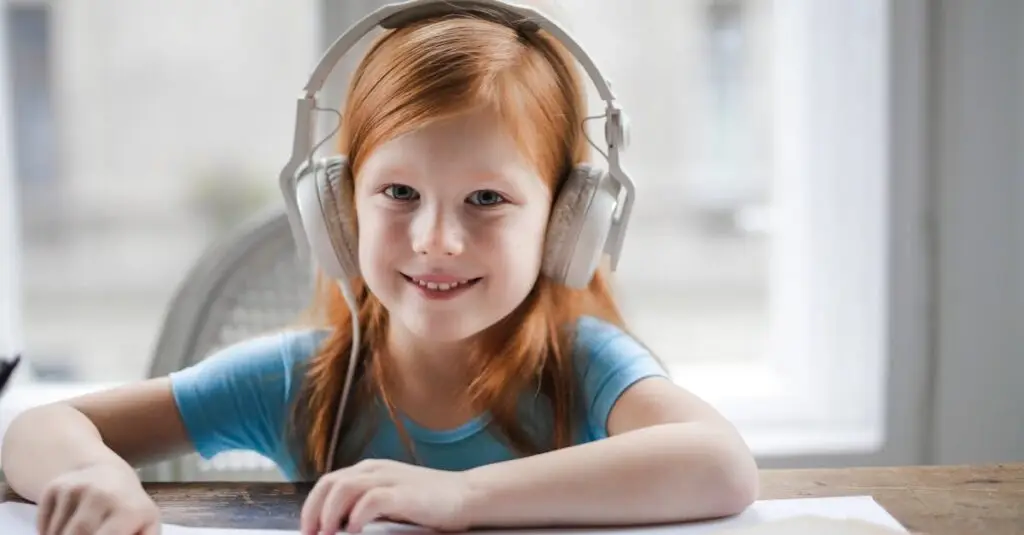
You do not need to be a proctor. You just need to be a quiet observer of the “leaks” that happen during and after the laptop closes. These tiny behaviors are often more telling than a formal test. If you want something simple to follow while you listen, I put together a step-by-step checklist you can use during lessons.
Listening: The Command Test
Does your child start reaching for their notebook or a specific prop before I have to repeat the instruction in English? If they are moving along with the flow of the lesson without looking at you for a translation, the connection is solid.
Other clues to look for:
- They laugh at a joke I made in French before I have even finished the sentence.
- They accurately follow a “Simon says” style game without looking at what the other students are doing.
- They can find a specific object in their room when I describe it in French, even if I do not use the exact name of the object.
Speaking: The “Out of Screen” French
Speaking on camera is a high stakes performance. It is intimidating! Instead, listen for the French that happens when the camera is off. Those unprompted, low pressure moments are the most honest assessment of their comfort.
Other clues to look for:
- You hear them correcting their own pronunciation while they think they are alone.
- They use a French word to describe a feeling, such as saying they are “fatigué” instead of tired.
- They spontaneously count things or name colors in French while playing with siblings or pets.
Reading: Beyond the Screen
Reading in a second language starts with recognition. If your child can follow along with a digital text or identify key words in a shared document, they are building a mental map of the language.
Other clues to look for:
- They can point to the correct word on the screen when I am reading a story aloud.
- They recognize a word on a food label or in a book that we have practiced in our sessions.
- They can match a French caption to a picture without needing a translation.
Writing: Navigating the Chat
If your child can type a response in the chat that makes sense, they are progressing. I do not care if they miss a silent “e” at the end of a word or forget an accent. If I can understand their message through a screen, they have successfully navigated the hardest part of language: communication.
Other clues to look for:
- They use the annotation tools to draw or circle something I have described in writing.
- They try to use a new “fancy” word in the chat even if they are not 100 percent sure of the spelling.
- They start to use French punctuation or short “texting” style phrases that we use in class.
Organizing Your “Teacher Instinct”
Stop worrying about traditional grades. Use our three bucket system to track their digital growth:
- Independent: They follow the screen and my voice with no help from you.
- Developing: They get there, but they look at you for a “nod” of approval first.
- Not Yet: They look at the screen like I am a broadcast from a different planet.
And if you’re wondering how often to do this, a simple 8–12 week rhythm usually works best.
Why Our Partnership Matters
The best data I get is not from a formal quiz. It is the message I receive from a parent saying their child ran to them immediately after class to explain exactly what we just learned. Those tiny, real world moments are the true markers of fluency.
I love hearing that a student recognized a word in a recipe while watching a cooking channel or that they suddenly felt the urge to tell you what a specific word means in French during dinner. These “after effects” show that the language is moving from the laptop screen into their real lives. I provide the structure and the digital classroom, but you are the one who see the sparks fly once the lesson is over. When we share those observations, we get the real story of their success.
How This Fits With Our Approach at Inspire
At home observation works best when it is paired with professional teacher feedback. In our online classes at Inspire, we track progress across all four pillars: listening, speaking, reading, and writing. We share these insights with you through progress reports and detailed notes.
Over time, many parents notice that what they see at home lines up perfectly with what I am noticing in class. For example, a child might begin using more French during play at home around the same time I note increased participation or a boost in confidence during our sessions. When those signals line up, it gives us a much clearer picture of their development.
Ultimately, the connection we build with the students and our genuine interest in them as a whole person is what makes the difference. As I mentioned at the start, we take into account the pillars of language, but we also respect the entire emotional and creative process. That combination of what you notice at home and what we see in class is the true strength of online learning when it is done thoughtfully.